Tell it what moved.
Say what you saw and the sighting fills itself in. Report a sit in a few taps. Keep the sign you find. Every report you log makes the next plan sharper.
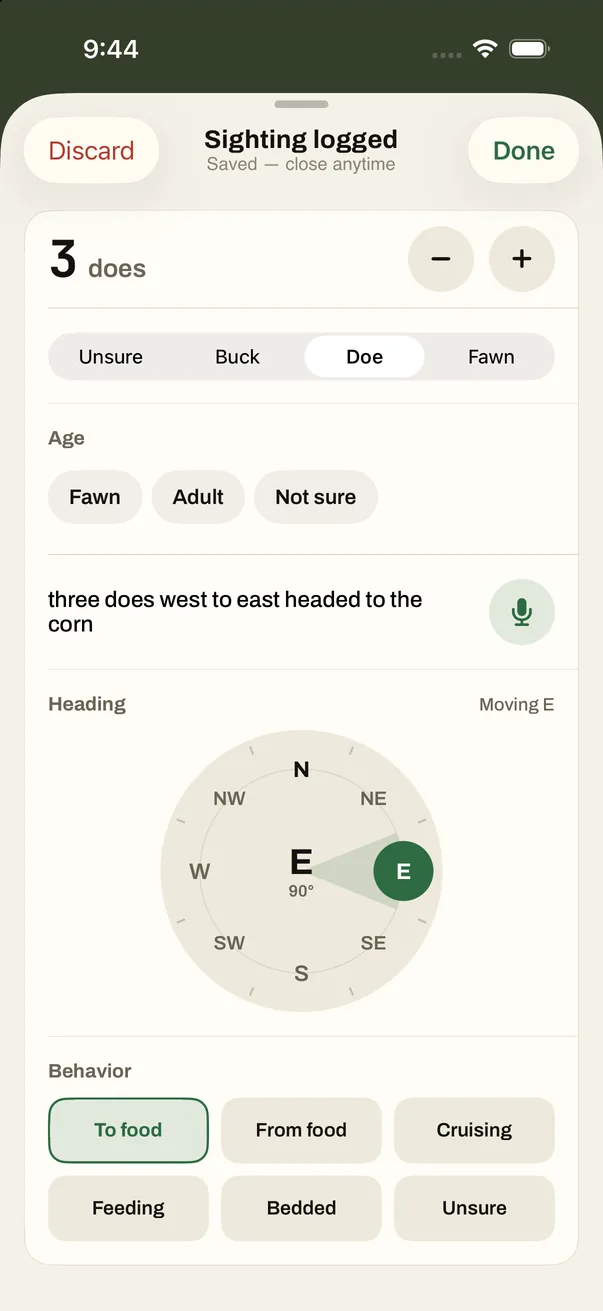
Say it, don’t type it.
Tap the mic and talk with your binoculars still up. The count, the sex, which way they went and what they were doing fill in from what you said.
- How many, and whatThree does, from what you said.
- What you saidKept with the sighting, word for word.
- What they were doingTo food, from food, cruising, bedded.
- Saved as you goClose it anytime. It’s already logged.
- Which way they went“West to east” puts them heading east.
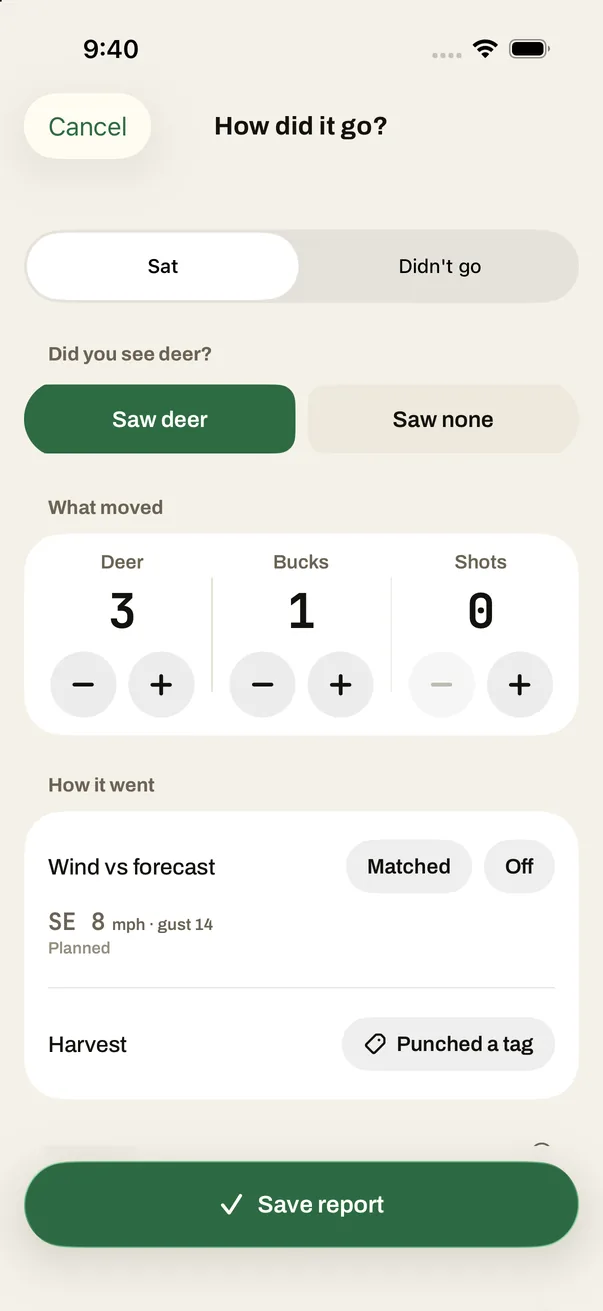
How did it go? A few taps.
Sat or didn’t go, saw deer or saw none, what moved, and whether the wind did what the forecast said. After a plan, Antlr asks now and then, so a quick answer is one tap.
Your season of sits, in one place.
Each sit keeps its stand, its hours and the deer that came by, with the sightings you logged from the stand on its timeline.
Know when a stand needs a rest.
Sit the same stand too often and the deer notice. Antlr counts your sits at each stand and says when it’s ready again, when to rest it, and when to rotate.
Every rub and scrape, with a read.
Drop a pin on the sign you find, add a photo, and Antlr says what it likely means and how to hunt it.
Fresh rub on a travel edge. Wet bark and a clean break point to a buck working this line in the last day or two.
It sits on the edge between the cedar bedding and the creek crossing, a classic evening route.
Your move: hunt it on a north or northwest wind in the last hour of light.
Drop a pin, log a sighting, or report a sit. Every one of those tightens what Antlr knows about your woods.
Tell it what moved.
[Free scans and trial terms]